The Surprise Package


I'm sure most of you have heard of the Sanhedrin, a body of 70 religious judicial leaders in Israel which served as the highest ranking judicial body in Israel since the days of Moses. In a number of places in the New Testament, we read about how the Sanhedrin viciously waged war against not only Christ Himself during His ministry, but against His disciples as they went out to boldly proclaim the gospel against their orders after He ascended back to heaven.
The Sanhedrin went out of existence about 1,600 years ago, but what many believers today aren't aware of is that this religious legislative body has been relaunched in modern times. A newly formed version of the Sanhedrin is alive and well in Israel today, and what motivated me to write this article is the fact that this newly formed Sanhedrin just recently passed a ruling that has clear prophetic implications for what Israel will experience in the lead-up to and during the coming Tribulation.
And their attitude toward that ruling might be characterized as follows:
The Sanhedrin has told God
what they want Him to do.
Now they're presuming that
God will deliver the goods.
Although a couple of members of the Sanhedrin had objections to the ruling, a minor tweak of the wording here and there finally brought them on board in the end. So at least it has the appearance of being unanimous.
What I want to do in this article is give you some brief background information about the Sanhedrin, review the key points of their recent ruling, discuss reasons why the Sanhedrin assumes God has to comply with their ruling, and also reasons why there are rabbis out there who strongly disagree with this "God must comply" idea (and why they are right to disagree with it). But I especially want to consider the potential implications this ruling may have in the coming days, because I am convinced that God will indeed respond to each point of the Sanhedrin's ruling.
And as a preview of coming attractions, let me say this:
Yes, I believe God will respond
to every point of their ruling—
but in His way, not their way.
In other words...
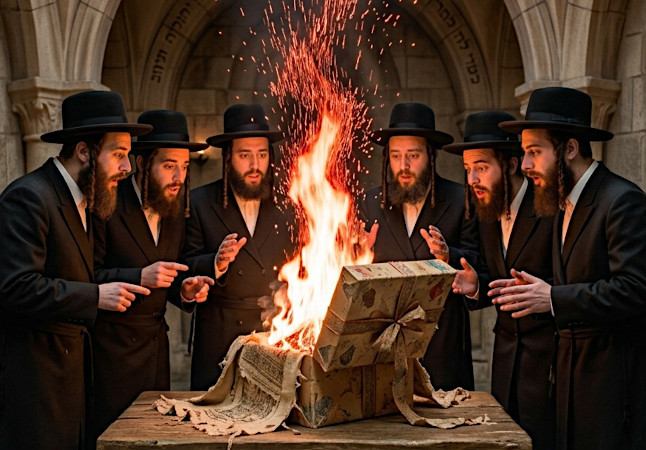
God's got a surprise
package waiting for them.
"Gather to me seventy men..."
After the people of Israel listened to the reports of the 10 spies who said there was no way they could enter and take possession of the Promised Land in spite of God's promises, they began a 40-year period of wandering through the wilderness as a judgment from God. During those 40 years, every single male who was at least 20 years old at the time of their refusal to enter perished in the desert as a judgment on the people for their lack of faith.
Only then did God allow them to enter the land He had promised them.
And they whined all the way. No food. No water. No meat. Not enough this. Not enough that...and of course they would come complaining to Moses, their leader. God saw that Moses was being overwhelmed by the people's problems and complaints, and did something to give Moses a break:
16And the LORD said to Moses, Gather to me seventy men of the elders of Israel, whom you know to be the elders of the people, and officers over them; and bring them to the tabernacle of the congregation, that they may stand there with you. 17And I will come down and talk with you there: and I will take of the spirit which is on you, and will put it on them; and they shall bear the burden of the people with you, that you bear it not yourself alone.
(Numbers 11:16–17 / emphasis added)
Obviously this was a great help to Moses and to future leaders of Israel, and thus it remained part of their culture for many centuries. It later became known as the Sanhedrin, which comes from the Greek word sunedrion ("sitting together" or "assembly").
From what I've read, it appears that some people assume the Sanhedrin ceased to exist after the Romans attacked Jerusalem and destroyed the Second Temple in AD 70. But in reality, the Sanhedrin was pieced back together at some point afterwards and continued meeting. Although Roman Emperor Theodosius forbade the Sanhedrin from ever meeting again in AD 358, according to historical records they held out for a few more decades. By most accounts, the Sanhedrin officially met for the last time in AD 425 in Tiberias, a city on the western coast of the Sea of Galilee.
But no matter what precise year the Sanhedrin came to an end, this biblically based judicial body in Israel was finally re-established in modern times, and convened for the first time in nearly 1,600 years on October 13, 2004.
But on July 20, 2026,
the Sanhedrin made
a ruling that has clear
prophetic implications.
The nascent Sanhedrin has made a number of rulings in the last 22 years—some minor, and several a bit more significant. One of the newly reformed Sanhedrin's first decisions (2004–2005) was to form a committee to determine the exact location where the Third Temple should be positioned on the Temple Mount (particularly in relationship to the Dome of the Rock), and to begin gathering supplies for the temple's construction.
More recently, in 2024–2025 the Sanhedrin issued a ruling that called for Jews all over the world to make aliyah, or to immigrate to Israel. This was largely the result of the swelling tide of anti-Semitism that Jews are increasingly facing in many countries...including the United States, it saddens me to say.
But on July 20, 2026, the Sanhedrin made a ruling that has clear prophetic implications. And as such, it should have the attention of prophetically knowledgeable people...at least it certainly has mine.
Now, I hope you know me well enough to understand that I don't say things like this lightly. But after I read about this ruling, I began to muse over the points that the ruling mentioned and it wasn't long until the Holy Spirit was making them turn red hot in my spirit. And I know what that means:
"Dude, pay attention—this is important."
And so here we are. And I'm paying attention.
The ruling
So first let's take a look at the contents of the ruling the Sanhedrin made on July 20. The following summary of the ruling is quoted from an article at the news website Israel365 News.
First resolution
Removing hostile forces:
The first resolution addresses removing hostile forces. The ruling states: "The court rules that every kind of erev rav [the 'mixed multitude,' a term for corrupting elements within the nation] [comment in the source], every kind of Amalekite [meaning for Israelis: any insanely evil enemy of the Jewish people], every kind of Ishmaelite [meaning for Israelis: an outcast or wanderer], every kind of traitor of every stripe, and all the forces of evil shall leave the Jewish people and the Land of Israel. And just as the court below [the Sanhedrin] has ruled, so we ask that the court above [heaven] rule the same, and so may it stand." [In other words, the Sanhedrin is fully expecting God to carry out these resolutions.]
Second resolution
The revealed kingship of Heaven, Mashiach, and the Temple:
The second resolution asks for (a) the revealed kingship of Heaven, (b) Mashiach [Messiah], and (c) the Temple: "the revealed and powerful kingship of the Holy One, Blessed Be He, in mercy and in joy, upon every member of the Jewish people, upon every family, every community, every tribe, and the whole Jewish people, upon the righteous among the nations and the sons of Noach [Noah], and upon the entire world." It continues: "The court asks that the Holy One, Blessed Be He, reveal our righteous Mashiach. The court asks that the Holy One, Blessed Be He, remove and erase every obstacle so that we may build the Beit HaMikdash [the Third Temple]." [Note that there are three points included in this one resolution: This resolution calls for (a) God to reveal His kingship over all Jewish people and ultimately the whole world, (b) the Messiah to be revealed, and (c) the Third Temple to be built.]
Third resolution
The return of prophecy:
The third resolution asks "that the Holy One, Blessed Be He, restore prophecy [and prophets] to the Jewish people, and guard the prophets from all those who seek to harm the prophets of Israel."
(emphasis & [comments] added)
— From Israel365 News [Source]
First of all, notice that these three resolutions actually contain five main points, and this is how I will refer to them throughout the remainder of this article, in the order they are mentioned in the ruling:
1. The removal of enemies of the Jewish people from Israel.
2. The revelation of God's kingship over the Jews and the world.
3. The revelation of the Messiah.
4. The building of the Third Temple.
5. The restoration of prophecy to the Jewish people.
Note that points 2. through 4. are combined into a single resolution. I mention this simply because I will be discussing and referring to these items as points 1. through 5. as above, rather than their resolution number. In other words, if I refer to point 3. I don't mean the third resolution—I mean point 3. in the above list of five points.
Each of these five points (even the order in which they are given) has prophetic significance, and I can guarantee you one thing:
Most of the true significance of these points is lost on the Sanhedrin.
The "it's not in heaven" principle
Now, as I said, the Sanhedrin is fully expecting God to respond favorably to the five points of this ruling and carry them out as requested, and there is a historical reason behind what strikes many people as a rather presumptuous attitude toward the Almighty...you know, sort of like:
Hey God, we the Sanhedrin have
made a decision...and that means
it's time for You to get it in gear.
This attitude of the Sanhedrin that God is obligated to respond favorably to a ruling they make is based on what Jews refer to as "lo bashamayim hi," or the "it's not in heaven" principle. This is based on a phrase in Deuteronomy 30:12, and we'll circle back for Deuteronomy shortly.
Over the centuries, and especially after the attack on Jerusalem and the destruction of the Second Temple by Roman legions in AD 70, gaggles of Jewish rabbis have come along who have been intent on reading tons of their own opinions into the Tanach (basically, the Old Testament) they originally received, and what's worse is the fact that they reached the point where they treat this compendium of opinions (i.e. the Talmud) as being on par with Scripture.

One such popular story (yes, story) from the Talmud that is used to support this attitude of the Sanhedrin appears in Bava Metzia 59b, and it appeared in the second century AD. In the story, Rabbi Eliezer has a dispute over a point of law with some other rabbis, and he calls on heaven to prove that he's right. And lo and behold: a carob tree uproots itself, a stream reverses course and begins flowing in the opposite direction, the walls of the study begin to lean inward, and finally a voice from heaven says that Rabbi Eliezer is right. Another rabbi, Rabbi Yehoshua, stands up and declares the line from Deuteronomy:
"Lo bashamayim hi!"
(It's not in heaven!)
But the intended meaning that Rabbi Yehoshua was applying to this line from Deuteronomy 30:12 was that once the Law of Moses was given at Sinai, the authority to make rulings on it belonged to human courts, not heaven itself. The Talmud regales us with a story about how Rabbi Natan later spoke with the prophet Elijah and asked him what God did at the moment the decision in question was made. According to the story, Elijah told him that God simply laughed and said:
"Nitzchuni banai, nitzchuni banai!"
(My children have defeated Me!
My children have defeated Me!)
In other words, this story gave birth to the Sanhedrin's principle that…
"Just as the court below has ruled,
so may the court above rule the same."
(And as I indicated in the above quote, the "court below" would be the Sanhedrin, and the "court above" is heaven.)
Many rabbis claim that precedent for all this goes back to Genesis 18 where God is going to completely wipe out Sodom and Gomorrah, and Abraham bargains with God over how many righteous men it would take for Him to spare the cities (residents of which, coincidentally enough, included his nephew Lot and his family). Abraham successfully whittles God from 50 all the way down to 10, but many would rightly argue this isn't exactly the same thing.
There were a number of fanciful tales invented by various rabbis over the centuries that contributed to the establishment of this principle that heaven was obligated to uphold the rulings of the Sanhedrin (at least good or positive ones), but I'll spare you the details since this was arguably the primary one that got the ball rolling.
On par: This warrants repeating: It is heartbreaking to those who know the Bible is God's inerrant Word how the Jews have collected thousands of opinions and creative anecdotes and moral tales of every stripe written by legions of rabbis over the centuries and compiled them into the Talmud. To the surprise of no one, many such rabbinical opinions are in disagreement, and produce endless arguments among rabbis. But the heartbreaking part is that rabbis today consider the Talmud to be on par with the prophetically confirmed Word of a Creator God given to us by real prophets whose prophecies can be 100 percent confirmed by historical events—that is, the Bible. Tragically, they persist in doing this even though it is clear that the voluminous writings of these learned men are about as "divinely inspired" as Aesop's Fables.
So over the last two millennia, Jewish scholars have hammered out a variant meaning of a line from Deuteronomy 30:12 and transformed it into a magic wand that gives the Sanhedrin permission to make presumptuous rulings that God is obligated to carry out.
Of course, any competent student of Scripture knows better:
God is not so obligated. He never has been, and He never will be.
The general pattern we find in Scripture is a bit more along the following lines:
*GOD SPEAKS*
Man obeys and is blessed.
—OR—
Man disobeys and is judged.
That seems to be the general thrust of it. I mean, God answers prayer and all that—but that's certainly not the same as treating God like a Cosmic Gopher and telling Him what we want Him to do and expecting Him to produce the desired results chop-chop.
So what's the deal with Deuteronomy 30:12?
As I said earlier, the Jews took the phrase lo bashamayim hi (it's not in heaven) from Deuteronomy 30:12 and essentially used it as the basis for the belief that when the Sanhedrin makes a ruling (presumably a good or positive one), God is obligated to make sure it comes about. Well, I figure it might be a good idea to take a closer look at this passage of Scripture to find out what it actually says and means, wouldn't you agree?
In Deuteronomy 30, Moses has just finished reviewing the words of the covenant God had made with the people of Israel, and at the climax of his address he stresses the fact that God has fully delivered His covenant to them—they are in complete possession of it and know without question what they should do and how they should respond, because God has spelled it out for them as clearly as humanly possible. There are no lingering questions about what God expects from them, and Moses seeks to drive that point home:
11For this commandment which I command you this day, it is not hidden from you, neither is it far off. 12It is not in heaven, that you should say, Who shall go up for us to heaven, and bring it to us, that we may hear it, and do it? 13Neither is it beyond the sea, that you should say, Who shall go over the sea for us, and bring it to us, that we may hear it, and do it? 14But the word is very near to you, in your mouth, and in your heart, that you may do it. [And it's right there in your hands, written in black and white, that you may never forget it.]
(Deuteronomy 30:11–14 AKJV / emphasis & [comments] added)
That's what Moses is saying in the passage in question: God's requirements and expectations are not far off, so that someone has to go to great lengths to find out what they are—they don't have to go all the way up to heaven or travel by sea to a distant land to find out what God requires and expects from them.
God's requirements and expectations are very near to them: They are in their mouths and in their hearts. They also have them written down in black and white so they will be remembered and passed down to future generations.
There are no more mysteries about what God expects from them. They know—they've got a lock on it. Of course, they failed to do it...but still.
This passage has nothing whatsoever to do with God being obligated to follow through on the Sanhedrin's rulings, or man having some degree of authority over God. It doesn't say that, and it doesn't mean that.
Note that there is no shortage of biblically knowledgeable Jewish people who basically agree with what I have just said—they're able to read and interpret Scripture in a sensible, clear-minded manner without kowtowing to the misguided beliefs of the Sanhedrin. For a more in-depth look at this topic that is light years beyond the brief remarks I have presented here, feel free to check out this excellent blog entry at the Times of Israel.
Fulfilling...er, responding to the five points
As I mentioned at the outset, as I mused over the five points of the Sanhedrin's recent ruling—points they fully expect God to carry out, it wasn't long before the Holy Spirit made them burn a hole in my spirit. I knew there was something prophetically significant going on with this ruling, and it didn't take too awfully long for the Holy Spirit to lead me to pay dirt.
Again, let me emphasize that God isn't simply going to fulfill these points as advertised—that is, the way they have been drawn up by the Sanhedrin. Oh no. I am convinced God is going to take these five points and respond to them His way, not in the way the Sanhedrin is expecting. Why? Simple:
God's going to use these five points in the Sanhedrin's ruling as part of His final efforts to get through to His stiff-necked people in the lead-up to and during the coming Tribulation as He draws a remnant of them to faith in the Messiah He sent them 2,000 years ago, and drops a final round of judgment on those who stubbornly persist in their rejection thereof.
So let's see where this is really going:
1. The removal of enemies of the Jewish people from Israel.
Point 1. basically asks God to remove any group of people from Israel that are enemies of the Jews, or that denigrate, deprecate, or detract from the Jewish nation, its culture, or its people in any way. This might include a variety of groups, but at least it would include most Arab/Muslim groups. Many Arabs and other groups of Muslims have long been tolerated in Israel, even welcomed by many. But the truth is that there are Jews (who are typically some of the warmest and most welcoming people on earth) who privately admit they feel as if Israel would be better off (or at least safer) if the bulk of the Arabs and other Muslim groups decided to just pack up their Qur'ans and go elsewhere.
But is that how God is going to respond to this point?
No. Well, then what is He going to do?
Oh, God's going to remove a group of people all right...and I strongly suspect it won't be all that much longer until He does. And I also strongly suspect you've already guessed what group of people He's going to remove:
Born-again believers in the gospel
of Jesus Christ. In other words…

THE CHURCH.
I am convinced that God will respond to the Sanhedrin's desire for Him to "remove enemies of Israel" by removing the one group that they have scorned, rejected, and refused to listen to for 2,000 years. God is going to remove the one group of people who know the Jews crucified their Messiah 2,000 years ago, and know that God is preparing to purge the Jewish people in the judgments of the Tribulation as He culls out a believing remnant of them who will be saved from and protected through those judgments.
And most importantly of all, this group knows how the Jews (or anyone, for that matter) can escape these coming judgments before they get started:
And it's by believing in faith in the sacrifice
Christ made to pay the penalty for their sin.
The removal of this group will occur in a moment, in the twinkling of an eye, and the tumultuous lead-up to the judgments God has ordained for His people Israel and the fallen world that has persecuted them will be off and running.
Call it the catching away. Call it the harpazo. Call it the Big Snatcheroony.
It makes no difference what you call it, because God's Word makes it clear that it's going to happen, and makes it equally clear that it will happen before the Tribulation gets started. So feel free to torque off a sizable portion of today's modern Christian world and call it the R-word:
The Rapture.
Or better yet, send them into a real tizzy and call it the PTR-word:
The pre-trib Rapture.
But you'd better stand back, because their heads are liable to explode.
2. The revelation of God's kingship over the Jews and the world.
Just like several of these points, the thing about this that jumps out at me is the fact that yes, God really will fulfill it; but He will fulfill it in a way the Jews cannot begin to comprehend at this point.
During the Tribulation God is certainly going to reveal His kingship over the world by judging the world for rejecting the grace and mercy He has shown them through His Son the Messiah, and for persecuting His people Israel.
And God is also going to reveal His kingship over His people Israel, but certainly not in the way the Sanhedrin is imagining it.
God loves His people Israel and always will. They are the apple of His eye (Zech. 2:7), and He will fulfill all His promises to them. But they rejected and crucified the Messiah He sent them 2,000 years ago in order to atone for their sin, and ever since then they have staunchly resisted all efforts to make them see the truth of what God did for them in the person and work of His Son.
But here's the thing: The personal fulfillment of God's kingship over anyone depends solely on their relationship with His Son. Ever since Christ came to carry out His work of atonement 2,000 years ago, the one single, solitary way to God has been through belief in faith in Christ's work of atonement:
6Jesus said to him, "I am the way, the truth, and the life. No one comes to the Father, except through me."
(John 14:6 / emphasis added)
From that point on, it will always be His way or the highway.
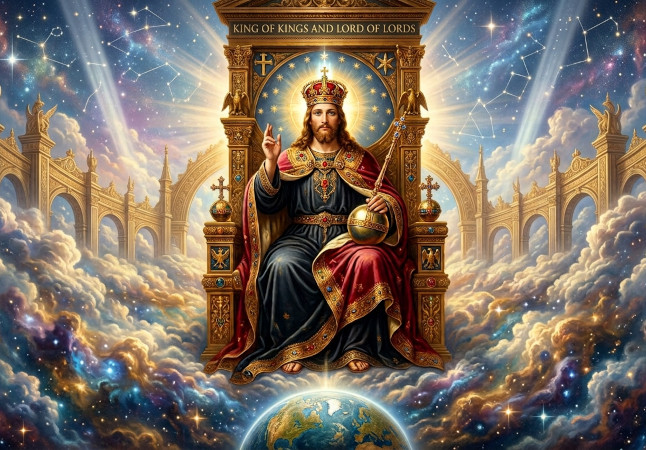
It's Christ or nothing—ever since God's
Son died and rose again, a relationship
with God begins at the foot of the cross.
And that certainly goes for the Jewish people. However, God is going to have to hammer His people with an Antichrist who will defile their shiny new temple, and they will be hunted down and killed if they refuse to bow their knee to him as their true Messiah. But Zechariah 13:8–9 tells us that one-third of the Jews will refuse and finally trust in their real Messiah and be saved.
And when they do, God will once again be able to reveal His kingship to them in the way He desires (which is unlike what many accuse Him of):
As a loving heavenly Father who
protects and cares for His children.
Not an implacable deity who seeks
only to unleash judgment on them.
But good luck trying to explain that "foot of the cross" stuff to the Sanhedrin.
3. The revelation of the Messiah.
I've written about this before, but the Jewish people were immersed in feverish speculation concerning the revelation of their promised Messiah in the early first century AD (around AD 25–30). This was primarily due to the changeover to a new millennium the rabbis had calculated, although the fact that they had become occupied by the Romans and thus in need of a "second Moses" also contributed to their messianic speculations.
And whaddya know...that's exactly the time period when a young drifter from the one-mule town of Nazareth appeared and started going from place to place performing miracles, spouting parables, and teaching about the kingdom.
And as I discuss in the article I linked to above, it's exquisitely ironic when Jesus says in Luke 19:44 that the Jews "knew not the time of their visitation," because in reality...
The Jews actually nailed
the time of their visitation.
The problem is they nailed
their Visitor to a cross.
With all due respect to the august members of the Sanhedrin, that "revelation of the Messiah" thing is over and done with. He came and went 2,000 years ago, and now we're waiting for Him to come back. The problem is that the Jewish people have been rejecting the truth of these events ever since. As a result, there is no possible way for God to fulfill this point in the manner the Sanhedrin is anticipating. Why?
Because He already has.
And now God is about to move heaven and earth in an effort to get the Jewish people to grasp the truth of this and come to a saving knowledge of what His Son their Messiah did 2,000 years ago.
But as I said, I believe God is going to respond to all five of these points in the Sanhedrin's ruling His way, not the way the Sanhedrin is expecting. So, since God cannot literally reveal the Messiah again (and this is not about the Second Coming...this concerns the Messiah's initial revelation), how exactly is God going to respond to point 3. in the foreseeable future?
God is going to allow the Jewish people to be introduced to a man who will play a key role in the building of the Third Temple (see point 4. below). This is a major point to check off the Mashiach to-do list for the Jews, except this isn't going to be their Mashiach—he will be a satanically manipulated impostor who will lead the bulk of the Jewish people 180 degrees away from the notion that their real Messiah actually came 2,000 years ago, and is now dropping judgment on them for persisting in their rejection of Him.
When this phony Mashiach enters that new temple around the midpoint of the Tribulation and desecrates it and insists on being worshiped as their God-in-the-flesh Messiah, I believe he will do so with the full backing of an alleged race of advanced aliens (i.e. demonic beings) who have supposedly come to help us.
So, if nothing else, this point of the Sanhedrin's ruling will help induce Jewish people who continue to harden their hearts toward the truth to cling to the fantasy that the events they are witnessing are the real deal, and will actually contribute to the deception that the Antichrist really is their Messiah.
4. The building of the Third Temple.
This one is actually pretty straightforward, because the Jews will build the Third Temple, just as advertised.
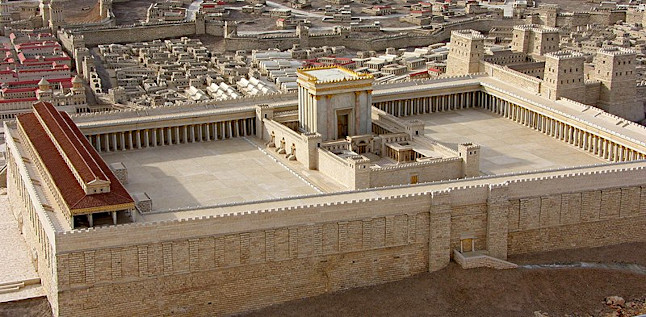
The real point, however, is that the Jews have no idea how God plans to use that temple, because as I mentioned in point 3. above, the Third Temple will ultimately play a key role in the Jews' relationship with the Antichrist, who will attempt to deceive them into believing he is their Messiah.
Another angle from which to view the Third Temple is the fact that the Jewish people, as sincere as they may be, can never fully re-establish their Old Covenant relationship with God—they can only truly return to God through a relationship with His Son their Messiah who came 2,000 years ago to shed His blood on the cross to atone for their sin and establish the New Covenant.
A slap in the face: How do you think God is going to feel when the Jews try to continue offering the blood of barnyard animals to cover the sin of the people after He sacrificed the precious blood of His Son to do that once for all 2,000 years ago, with the Church shouting it from the rooftops ever since?
Pleased?! I think not. No? Think Jerusalem—four Roman legions—AD 70. Please don't miss this—Paul makes the status of the Old Covenant following Christ's work of atonement crystal clear:
7For if that first covenant had been faultless, then no place would have been sought for a second. [If the first covenant had done the job, a second covenant wouldn't have been necessary...but it didn't.]
8For finding fault with them, he said, "Behold, the days are coming", says the Lord, "that I will make a new covenant with the house of Israel and with the house of Judah; [And this new covenant replaces the old one. Note also the New Covenant is made with Israel...the Church is grafted into it because the Jews initially rejected it.]
9not according to the covenant that I made with their fathers in the day that I took them by the hand to lead them out of the land of Egypt; for they didn't continue in my covenant, and I disregarded them," says the Lord. [You don't have to read a lot of the Old Testament to understand that the Jews failed spectacularly in keeping the Old Covenant under the Law of Moses.]
10"For this is the covenant that I will make with the house of Israel after those days," [i.e. the Tribulation] says the Lord: "I will put my laws into their mind; I will also write them on their heart. I will be their God, and they will be my people.
11They will not teach every man his fellow citizen and every man his brother, saying, 'Know the Lord,' for all will know me, from their least to their greatest.
12For I will be merciful to their unrighteousness. I will remember their sins and lawless deeds no more."
13In that he says, "A new covenant," he has made the first obsolete. [In other words, the New Covenant is called "new" for a good reason: the blood of sheep and cattle ain't gonna cut it anymore.] But that which is becoming obsolete and grows aged is near to vanishing away.
(Hebrews 8:7–13 / emphasis & [comments] added)
So when the Jews start rebuilding the temple, many of them will be thinking...
"Yep...Yahweh is fulfilling the Sanhedrin's ruling, just like they said!"
But once that temple is finished and they think they're ready to restart their Old Covenant worship once again, they're in for one big (unpleasant) surprise.
5. The restoration of prophecy to the Jewish people.
Here the Sanhedrin is asking God to once again send the Jewish people prophets to speak the Word of the LORD to them. Malachi, who lived in the fifth century BC, is the last prophet for the Jews. Of course, many Christians would point to John the Baptist, who straddled the line between the Old and New Covenants. Or even Christ Himself.
But for the Jews, it would be Malachi.
I've written about this before, but you might say it's a bit ironic that the Jews' last prophet was Malachi. That's because it's Malachi who tells us that a man will come in the spirit and power of the prophet Elijah (not Elijah in the flesh) in the end times to witness to the Jewish people:
5Behold, I will send you Elijah the prophet before the coming of the great and dreadful day of the LORD [the Tribulation]: 6And he shall turn the heart of the fathers to the children, and the heart of the children to their fathers, lest I come and smite the earth with a curse.
(Malachi 4:5–6 AKJV / emphasis & [comments] added)
So the Sanhedrin is asking for prophets, and by golly they're gonna get 'em: God is going to send them the Two Witnesses, who are two men who come in the spirit and power of Moses and Elijah in the end times.
As I wrote in the article I linked to above:
But by the time we get to Revelation 11, the Church is long gone. Now it is the Two Witnesses who are the lamp stands that serve as the primary conduit through which the Holy Spirit flows and operates on earth in the absence of the Church. It is the Two Witnesses who shed God's light to the world, and who serve to encourage Israel in rebuilding their temple and help prepare the Jewish remnant for their kingdom.
But that's not all. It's not all about building the temple and all that. It's not all about turning the hearts of the Jewish people back the LORD in preparation for their ultimate blessing in the form of the kingdom.
There is also a dark side to the ministry of the Two Witnesses.
And that dark side pertains to those who foolishly and persistently reject the grace and mercy a holy, just, loving God expressed to mankind though His Son and the act of atonement that His Son carried out on man's behalf 2,000 years ago at Calvary.
[...]
The Two Witnesses will heap burning coals on the heads of unbelieving Jews, until they either seek God in repentance or seek to kill them in rage. But if they attack them or try to harm them, they will suffer the searing consequences of their actions (Rev. 11:5).
— from "The Two Witnesses" [Source]
And it's that pesky "dark side" of the ministry of the Two Witnesses that makes me pretty sure that this isn't exactly what the Sanhedrin had in mind when they made that ruling. But that's the entire point:
God knows it's exactly what
the Jewish people need to hear.
Speaking of prophets, I would be remiss if I didn't mention the False Prophet of Revelation 13, whose primary job will be to force the people of the world to worship the Antichrist as God on pain of death.
Actually, many commentators are convinced that the majority of the world's people will be so thoroughly deceived by Satan's lies and as a result will be so enamored with the Antichrist that they will worship him and take his mark willingly. And before God...
The more I hear about the rise of the DSA,*
the more inclined I am to believe that.
*the Democratic Socialists of America
So yeah, the Sanhedrin is going to get some prophets all right, just like they asked for in their ruling. But the point is that, just as with a couple of the other points in their highly presumptuous ruling:
They're gonna get quite the surprise package.
No surprise
So the Sanhedrin is a group of Jewish men who have their noses pressed firmly to the legal grindstone, have completely rejected their true Messiah and His work of atonement, and who seem to be convinced they can treat a Creator God like a waiter at Cracker Barrel.

But they're in for a whale of a surprise.
(And I don't think leaving a big tip is going to help matters.) God is going to respond to all five points of their recent ruling, and He's going to do it in ways that should come as no surprise whatsoever to people who have read and studied the Bible, which includes the New Testament—an integral part of God's Word that most Jewish people foolishly reject and thoroughly discount.
But I've said it before and I'm gonna keep on saying it:
Every single Gentile born-again believer
should love, support, and pray for the
Jewish people and the nation of Israel.
They have been God's Chosen People from their very beginning, and they still are today. God has made unconditional promises to them that only depend on His faithfulness, and not on Israel's performance—and not one of those promises has been canceled or transferred to the Church. And we all stand to enjoy the benefits when He finally fulfills those promises.
Of course, hating Israel and the Jewish people is de rigueur for the liberal left today (Democrats, Democratic Socialists, Communists, whatever). So when you encounter someone who is associated with the conservative right-wing—even someone who is pro-MAGA and the whole nine yards, but who encourages people to hate Israel and denigrate the Jewish people, that should come as no surprise either. (Tucker Carlson, I'm lookin' at you.) Why? Because thanks to Satan's ground crew their numbers are steadily increasing.
And it should be no surprise that I don't listen to a word they say.
Greg Lauer — SEP '26
If you like this article,
share it with someone!

1. Adapted from Sunset Over Grass Field © AOosthuizen (source defunct)
2. "Ultra Orthodox Jew looking down in surprise at unopened gift" prompt, image generated by DepositPhoto's Nano Banana, AUG 26, 2026
3. "Group of ultra-Orthodox Jews looking at an open present with sparks and flames spewing out" prompt, image generated by Google Gemini, AUG 21, 2026
4. Adapted from The Babylonian Talmud © Oz Vehadar (text added), [CC BY-SA 4.0]
5. "The Rapture of the Church" prompt, image generated by DepositPhoto's Nano Banana, AUG 27, 2026
6. "Christ seated on the throne as king of the world" prompt, image generated by Google Gemini, AUG 30, 2026
7. 19 Shrine of the Book 005 by FOTLbill, marked as public domain [PD], more details on Wikimedia Commons
8. "God working as a waiter at Cracker Barrel, taking orders from six Jewish men" prompt, image generated by Google Gemini, AUG 30, 2026
9. Adapted from 9a–9b:
9a. Click Icon Vector © avastudio via DepositPhotos
9b. "Magnifying glass looking at printed letters ALS" prompt, image generated by DepositPhoto's Nano Banana, JUL 3, 2026
Scripture Quotations:
All Scripture is taken from the World English Bible, unless specifically annotated as the King James Version (KJV) or the American King James Version (AKJV).